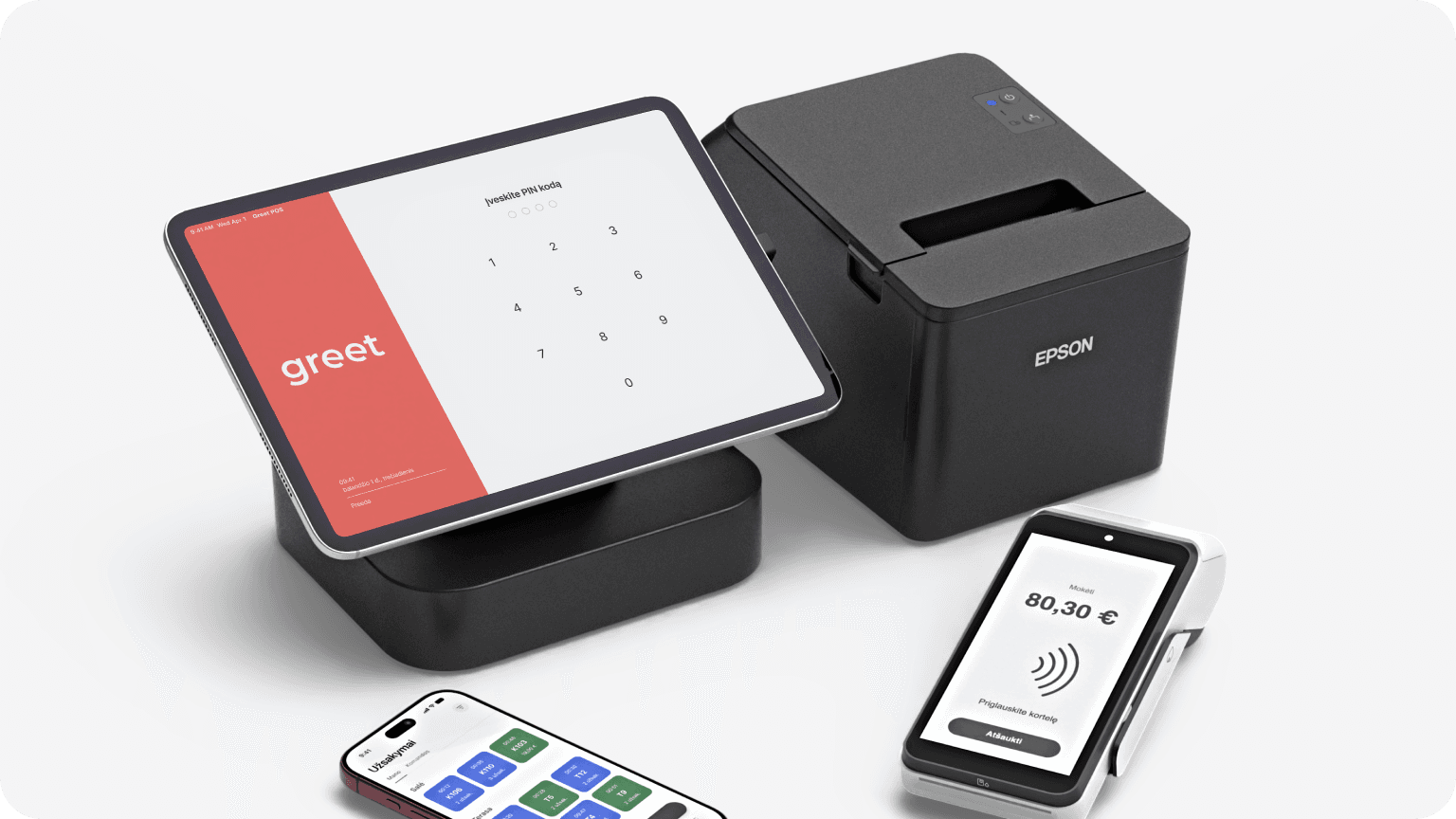
Cash register requirements in Lithuania 2026: what restaurants and cafés need to know
Over the past few years, the rules for cash registers in Lithuania have changed more than in the entire previous decade. Since 1 May 2025, every business that uses a cash register must submit its cash register data to the State Tax Inspectorate (VMI) through the i.EKA system, and in 2026 the transition period is already over.
This is especially relevant for restaurants and cafés: lots of transactions, a variety of payment methods, tips, and takeaway. In this article, we explain in simple terms what you need to know and what to check in your cash register.
This article is for information only and is not legal or tax advice. For your specific situation, talk to your accountant or contact VMI.
What is i.EKA and what has it changed?
i.EKA (the smart electronic cash register subsystem) is a VMI system to which cash registers automatically send sales data. It was rolled out in stages: first for large businesses with computerised cash registers, then for VAT payers, and since 1 May 2025 everyone who uses a cash register must submit data through i.EKA (VMI).
What this means in practice:
- Data goes to VMI automatically. The cash register sends receipt and report data by itself, so VMI sees sales almost in real time.
- No more paper cash register log. Instead, an electronic log is created automatically in the i.EKA system (VMI announcement, 15min).
- Registration is done remotely. You no longer need to visit a VMI office, but your cash register is registered in i.EKA on your behalf by a service company that you authorise (VMI FAQ).
- You don't always need to buy a new cash register. VMI states that some existing cash registers can be modified to send data to i.EKA (VMI).
Key cash register requirements in 2026
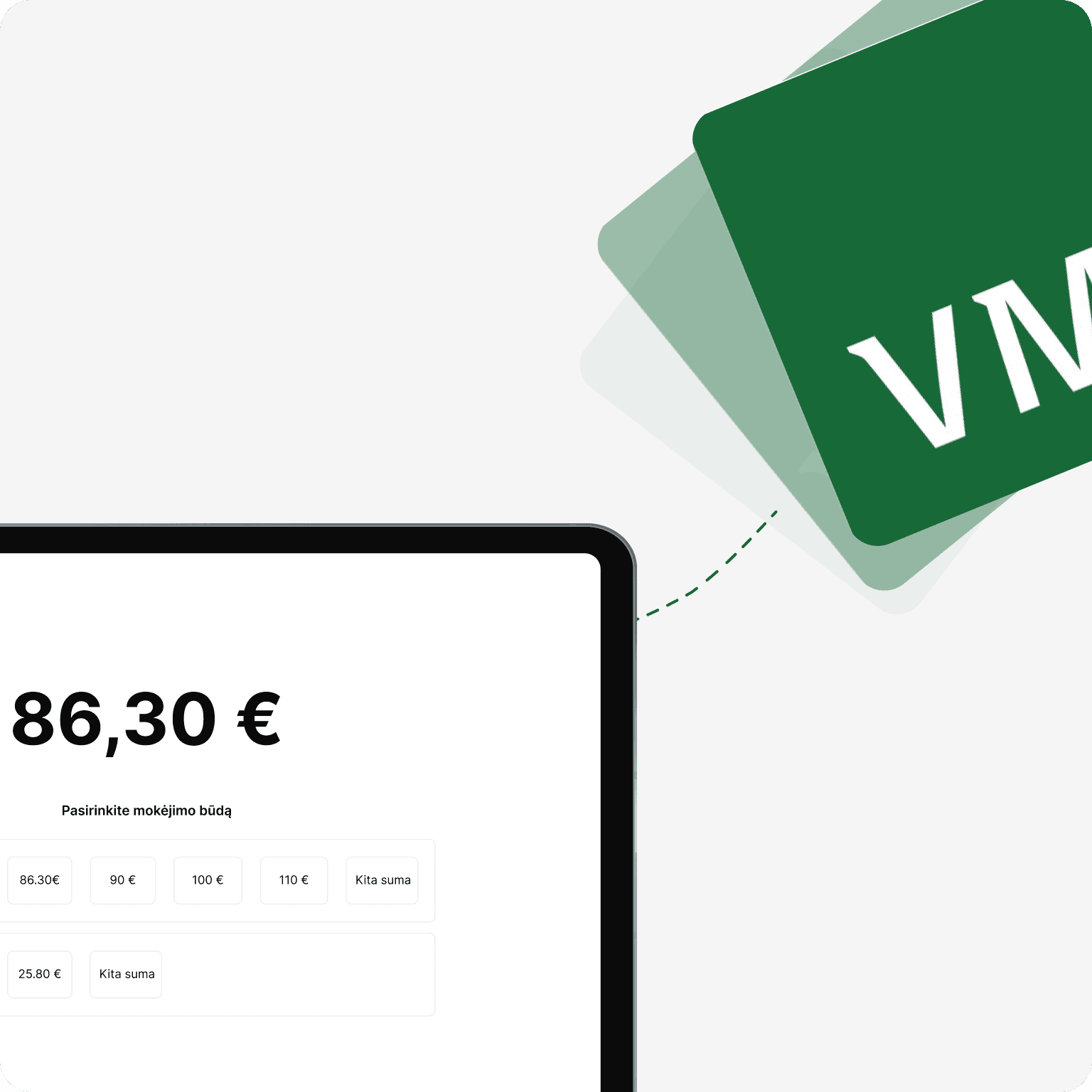
The cash register must be one of the two i.EKA types. Under the new technical requirements, the market offers cash registers with a security module and cash registers that use i.EKA virtual fiscalization (VMI):
| Cash register with a security module | Virtual fiscalization | |
| How it works | A physical security module signs receipts, and data is sent to i.EKA periodically | Receipts are signed directly in the i.EKA system at the moment they are issued |
| Hardware | A dedicated cash register or POS with a module | Can run on a tablet or phone |
| What to keep in mind | Suitable when it's important to keep working with a poor connection | A reliable internet connection is essential |
The cash register must be registered in i.EKA. During registration, the cash register is given a unique number, which must appear on fiscal receipts.
A receipt for every payment. A cash register must be used wherever a guest pays in cash or by card, and the guest must be given a cash register receipt.
The transition period is over. In 2025, VMI did not penalise businesses that were late but were actively installing new cash registers and had a contract with a service company (LRT). In 2026, this leniency no longer applies, so if a cash register is required and data is not being sent to i.EKA, administrative liability may apply.
What does this mean for restaurants and cafés?
Restaurants and cafés deal with many different payment situations, so before choosing a POS system, it's worth finding out how it handles the following cases:
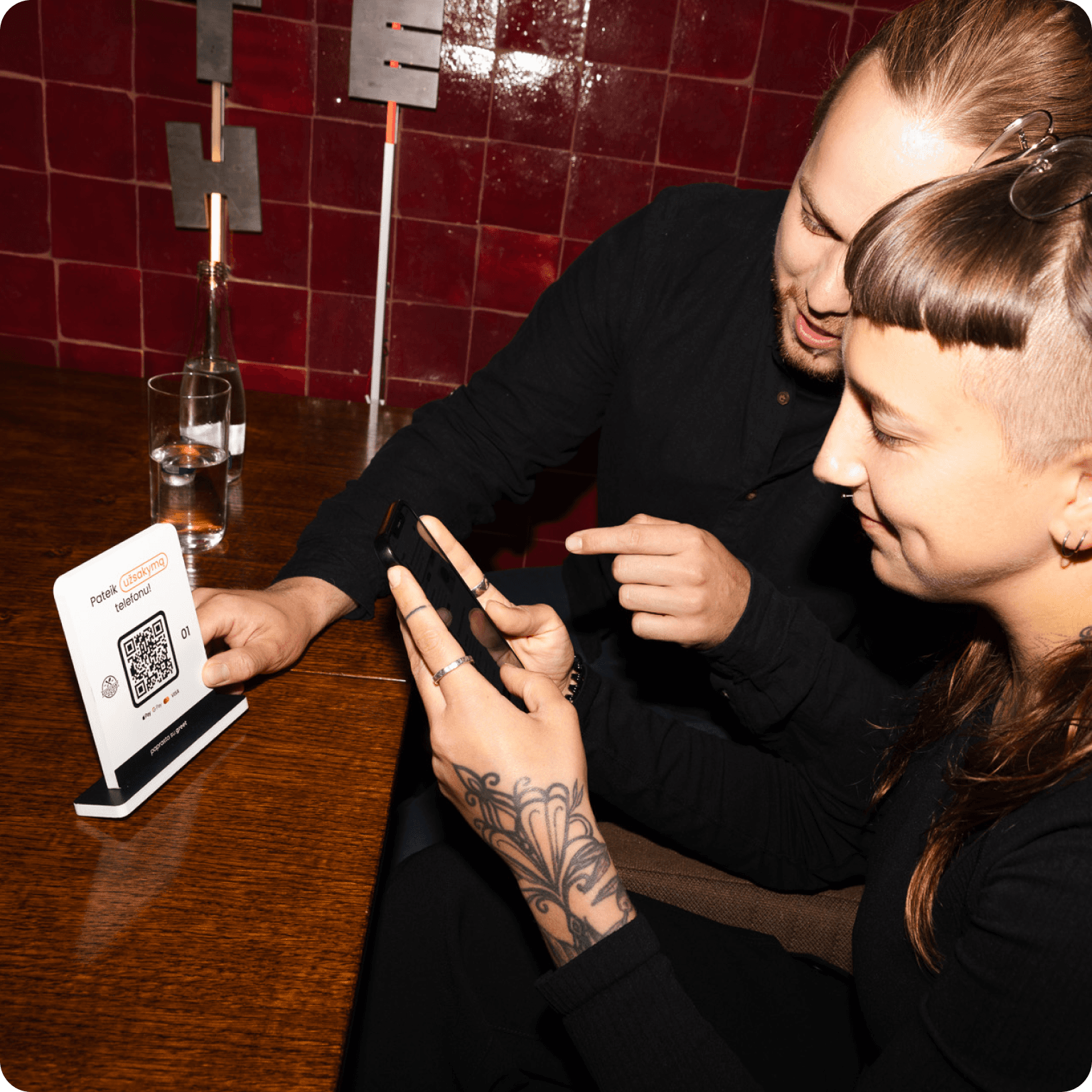
- QR ordering and payment at the table. The guest pays by phone, but a receipt must still be issued through a registered cash register. Check that QR payments automatically reach the POS and generate a fiscal receipt, rather than just sitting in the payment system.
- Bill splitting. When a table pays separately, each payment must be recorded correctly in the POS.
- Tips. If guests leave tips by card or via a QR code, it's important to know in advance how they are recorded and paid out to staff. It's worth talking to your accountant about proper accounting and taxation.
- Takeaway and delivery. Different products may be subject to different VAT rates, so they must be set up correctly in the POS.
- Refunds and voids. A receipt issued by mistake must be handled through the POS, and staff permissions to process refunds should be restricted and visible in reports.
- Working when the internet goes down. The internet connection can drop even at the busiest times, so find out in advance whether the POS system can work offline and how data is sent to i.EKA once the connection is restored.
What to ask your POS provider
If you're choosing a new cash register or want to make sure your current one meets the requirements, ask your provider these questions:
- Is your system already integrated with i.EKA, and what type of fiscalization do you use?
- Who registers the cash register in i.EKA, and is that included in the price?
- What happens when the internet goes down, and when does the data reach VMI?
- Do QR and card payments automatically generate a fiscal receipt?
- How much did the i.EKA integration cost your existing customers? It was a mandatory change for everyone, so the answer tells you a lot about what fees to expect in the future when the rules change again.
- Who is responsible, and how much does it cost, when VMI requirements change?
The rules will keep changing
i.EKA won't be the last change. VMI's technical requirements are updated regularly, so it's worth checking at least once a year that your cash register still complies with the rules, and following updates on the VMI website.
In short: make sure your cash register is registered in i.EKA and that data is being sent, know how it works offline, and discuss tips and VAT rates with your accountant. That way, you'll avoid unpleasant surprises during a VMI inspection.
If you have questions about your cash register or i.EKA, talk to the Greet team.